
Harold Lloyd waited impatiently as the projectionist queued up the dailies. This whole process was tedious, he thought. Cigarette smoke lingered in the beam of light from the projector. The screening room was hot, even in the dead of winter. It had already been a long day of shooting and Harold’s back was sore. The last time he played this character he was 31, now at 52 the long days were a drag. He shifted in his seat as he waited.
The director, Preston Sturges came in and took a seat in the front row, notebook in hand. He was joined by the script supervisor, cinematographer, the editor, and the sound department lead. They all had jobs to do. Harold felt superfluous. He used to be the one in Sturges’s seat, the perfectionist, in charge of everything and always getting his own way. No more.
Harold was only a few years older than Sturges, but the chasm between their heydays was enormous. Silent comedy and screwball comedy. A side eyed look and a pratfall vs. spitfire dialogue. The thing they had in common was control, a Harold Lloyd picture vs. a Preston Sturges picture. Harold was used to being in control.
He had been arguing with Sturges for weeks, trying to get him to remove his stranglehold of the dialogue and let Harold improvise with some physical comedy. It was in his contract to get an extra take to do whatever he wanted. One take for Sturges and his dialogue, one for Harold and his business. They’d argue all day during shooting and then come to the screening room and argue it all over again. Why did you hire me if this is not what you wanted? But at the end of the shoot, the movie poster would say written, produced, and directed by Preston Sturges, so arguments were futile.
Harold wanted this all to be over, so he could go back to his villa and stay retired. No more arguing. No more sweating. No more aches and pains. He knew without question that The Sin of Harold Diddlebock would be his final film.
If you know about Harold Lloyd today, you most likely associate him with hanging from a clock on the side of a high-rise building. It’s one of the indelible images in film history. If there’s a clip shown at an award show or a stuffy history of film documentary, the chances are you’ll see Harold in Safety Last, hanging on for dear life from a clock that’s precariously coming apart at the gears. So how much more is there to know about America’s second most famous free solo artist?
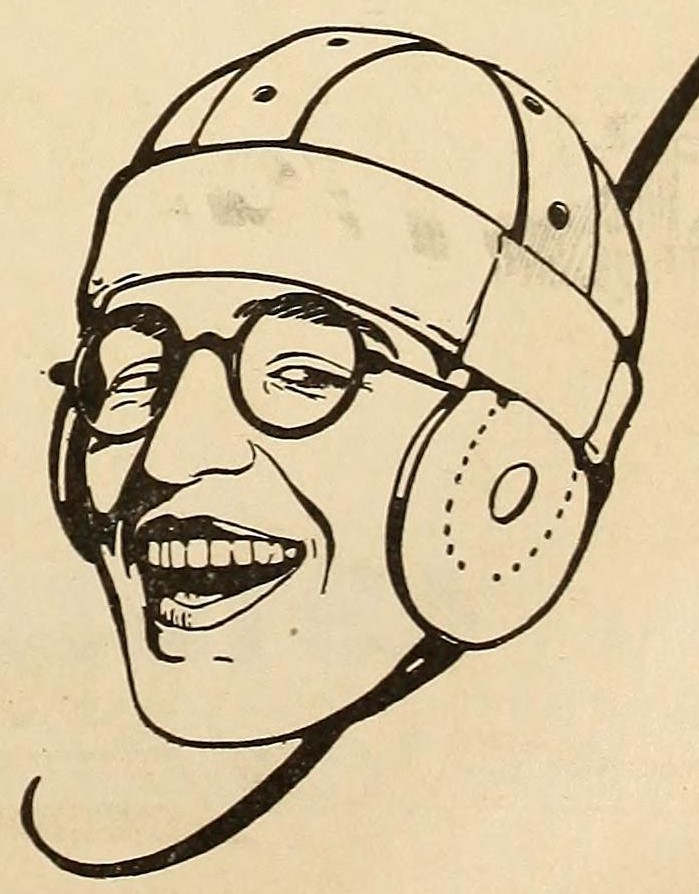
Safety Last and the big clock has become iconography, but just as popular at the time was Harold in a football helmet, running down the field, ducking tackles and making a mad dash to the endzone and ending up with chalk from the goal line impressed on his face. The Freshman was one of the biggest comedy hits of the decade. It cemented Lloyd’s place as a filmmaker who could make movies about characters, not just gags.
Of the three giants of silent comedy, Harold Lloyd typically comes in third. There’s even a documentary about him called “The Third Genius.” If you’re going to take the time to celebrate a career in a feature length documentary, you’d think you wouldn’t title it, “For Starters, He’s Not as Good as These Other Two Guys.” The other two guys being Charlie Chaplin and Buster Keaton.
He was never a comedian by trade. He had no vaudeville experience. He wanted to be a serious actor. Legend has it when his family was deciding where to move, his dad flipped a coin, heads for New York, and tails for California. The movies vs. Broadway. We have Safety Last due to a coin flip. During his time working to become a serious actor, Lloyd fell into comedy by accident. Of all the things he was doing, pratfalls and making people laugh paid. He was an actor playing the part of a comedian.
His popularity grew among audiences, and he was able to finance his own pictures. He used the studios for distribution, but he owned the films. He owned the negatives. Lloyd was a perfectionist. He would center his films around a large action set piece or stunt and work backwards. The human fly in Safety Last, the football game in The Freshman, the chase across town in Girl Shy all came first. Then Lloyd went to work on the character. He had a formula that worked.
Despite being considered the third genius today, his movies were more popular that Chaplin or Keaton. He was the consistent box office draw. Chaplin movies were events that dominated culture, but Lloyd was workmanlike, putting out a hit movie nearly every year in the 1920’s. Keaton was a distant third, his reemergence coinciding with his popularity on television.
Lloyd was also the most financially responsible and protective of his legacy. He stayed away from scandals and was considered a genuinely nice guy. No underage actresses. No alcoholism. He made movies every year, and every year his movies made money, until they didn’t.
Audiences lost interest in Lloyd’s talking pictures slowly. Each one made less and less at the box office. When Lloyd had to borrow money to make them, he simply stopped. He had enough money and he had an archive that he owned and could protect. He went off to his expansive estate, which he named Greenacres, and left Hollywood behind.
Lloyd was a shrewd businessman; he knew that scarcity created demand. But he created so much scarcity, he was nearly forgotten. He owned nearly every print and every negative of his films and watched in horror as other filmmakers had their work sliced and diced for television. He was determined not to let that happen to his work. His movies went into a vault and stayed there for decades. By contrast, Keaton had a second life on television, and his films were being rediscovered while Lloyd’s collected dust.
But not everyone forgot about Lloyd. In one of the strangest turns, twenty years after The Freshman, Lloyd returned to his character in the football helmet and starred in what could possibly be the first legacy sequel. The Sin of Harold Diddlebock was the brainchild of heir to the comic auteur throne, Preston Sturges.
Sturges made his name in films with screwball situations and snappy dialogue. Sullivan’s Travels and The Lady Eve were already modern classics. But his heart was with Harold in those silent comedies. Lloyd respected Sturges’s work enough to step in front of the camera once more.
The movie is a strange concoction. It opens with the final scene of The Freshman replayed as it was when it came out in 1925. Ten minutes of a silent football game to open a movie in 1947. Harold is carried off to the locker room by his teammates and it’s now a man in his fifties, playing a college student continuing the scene, and talking. Harold’s boyish looks carry the illusion, but the tone changes.
The Freshman opening is vibrant and alive, which makes the pivot to present day jarring when Lloyd is offered a job at an office where he stagnantly works for twenty years before being fired for never advancing. It’s a bit of a betrayal of the character we just saw breaking tackles and finding a way to win the big game.
The movie is just under ninety minutes, including the Freshman sequence, and somehow it takes fifty minutes to get to the main plot of the picture: Harold gets drunk and buys a circus. Before the circus, there are some melancholy moments after his firing where Harold is strong, despite the scenes being sappy and sentimental. We’re waiting for the gags and the gags aren’t coming.
In the middle of act two, Harold is talked into drowning his sorrows in alcohol for the first time. Harold is vibrant and hilarious as a drunk. Despite only making a few talkies, he handles Sturges’s dialogue extremely well. He’s being a different kind of movie star and making it work. He puts on a plaid suit, a giant hat and storms into an office screaming with a lion in tow and commands the screen.
The film’s climax comes as the lion walks out onto a high-rise ledge and Harold has to get him back. The obvious nod to Safety Last is surprisingly tense even when it’s forced to use the poor special effects of the time to fake the danger. Harold knows how to sell it. The actors scream their heads off for minutes straight in contrast to the silent comedies where no such vocal expression could have been used.
In the end, the movie is…not bad. Certainly not career ending or comeback destroying. The delay in getting to the circus plot is baffling and nearly cripples the movie. The choice to highlight the energy of The Freshman and immediately move to the mundane world of a boring job, and failed life, and a firing nearly cripples the movie.
Lloyd and Sturges battled throughout production. Just because Lloyd was only an actor in the film, did not mean he forgot any of his perfectionist tendencies from when he was making movies. Yet he pleaded for compromise and improvisation. He would have met Sturges halfway, but the script was the script, and Sturges was the multihyphenate.
The final scene, Harold Lloyd in the back of a hansom cab, having had it all work out in the end, was the final piece of acting he ever did. He could easily have been an actor for hire for a Billy Wilder or an Ernst Lubitsch if the studio system had been different and Lloyd had any desire to do so. He could have played Jack Lemmon’s quirky dad in any movie in the 1950s or 1960s. But the weird legacy sequel stood as the end.
Sort of…
As if two stubborn perfectionists weren’t enough, The Sin of Harold Diddlebock was produced by totally normal guy, Howard Hughes. After the film premiered in Miami, Los Angeles, and New York to poor reviews and poor box office, Hughes panicked. He pulled the film. If you were not in one of those markets and wanted to see it, you never got a chance. He decided to tinker with the movie himself, without Sturges and without Lloyd. He removed scenes, reshot scenes, and held it back for three years.
When Hughes purchased RKO, he had his own distribution arm and decided it was time to release the film again. Lloyd’s final movie was released for a second time, now under the name Mad Wednesday. Critics who saw both thought Diddlebock was flawed but coherent. Mad Wednesday was a patchwork mess. Sturges disowned it. Lloyd hated it. Lloyd’s instinct to retreat to Greenacres was validated.
Lloyd’s retirement from acting meant filling his time with different hobbies. He got into 3-D photography, taking over 300,000 pictures and hosting screenings for all manner of Hollywood celebrities. He built a state-of-the-art hi-fi system and would play classical music at all hours, loud. For Lloyd, retirement wasn’t retirement at all, it was a second career; one that remains almost entirely unseen to this day.
By the late fifties, Lloyd felt ready to come out of hiding once more. Chaplin was still famous. He had seen Keaton on television. It seemed that to continue in this manner was to be left behind. Lloyd had been privately screening his films for years to those who wanted to see them, but public showings were out of the question. He didn’t know how they would play to modern audiences. He needed a way to test the waters.
College visits became the testing ground for what was to come next. He brought individual reels of his work, not full movies. He sat in the back of auditoriums and took notes. What gags got laughs? What sequences dragged? What stunts elicited gasps from the students? Then he sat for long Q&A sessions touching on all kinds of topics. He began to curate the best of his work during those sessions. He was finding a way to present to a new audience.
In May 1962, Harold Lloyd flew to France. He was nervous. College kids were one thing, but the Cannes Film Festival was something else. He brought with him a new film of sorts, Harold Lloyd’s World of Comedy, a compilation of some of the best bits of his career. A neat and tidy introductory package of the best of Harold Lloyd. A greatest hits mix tape.
For the screening, he was placed front and center in an honorific box. Nowhere to hide. Harold squirmed as people filed into the theater. This would be the first time an audience like this would have seen his work; maybe any silent work. Who was even coming to see this film? Are the kids who write that movie magazine here? François Truffaut is on the Cannes Jury, but he wouldn’t come see an out of competition retrospective piece, would he? Harold didn’t want to look around to find out. He stared ahead and waited.
The theater went dark and the music and credits played. A silhouette of Harold appears and a narrator says, “You are about to enter Harold Lloyd’s World of Comedy.” The film invites the audience into the silent era like easing them into a warm bath. When the first gags appear, Harold trying and failing to commit suicide, the audience laughs. They didn’t know how much work went into crafting this compilation. Harold stripped the dialogue out of his talkies and added full sound effects to his silents, and it all played seamlessly.
Harold relaxed in his chair. The crowd was laughing. These were the journalists and cinephiles that would come to celebrate and appreciate his work at long last. Harold had no notebook. The work was done. He sat back and waited for the laughs to come at the moments he knew they would. It had taken too long to get here. Maybe he’d been too protective of his legacy. No use worrying about that now.
The film came to a close and the audience stood up and cheered.

Leave a Reply